NAVER, NVIDIA and Brookfield Commit $10 Billion to AI Data Center in Korea — What It Means for Fiber Infrastructure Demand
By Jergeo Engineering Team | July 24, 2026 · Based on NVIDIA and NAVER official press releases
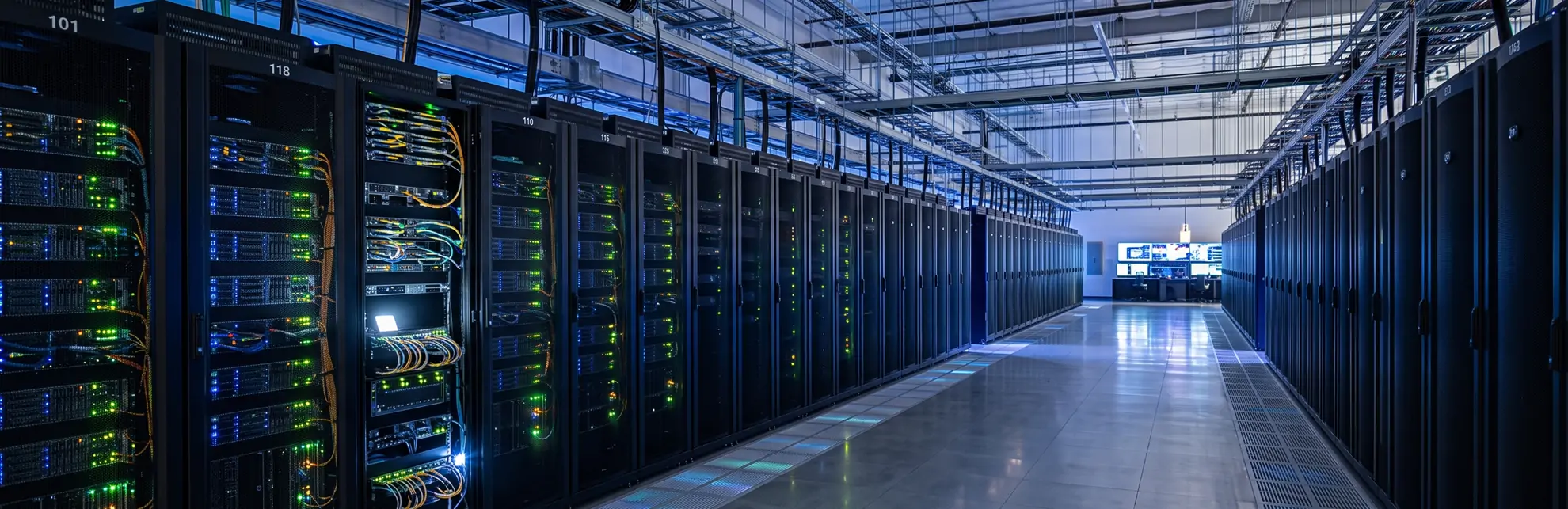
On July 24, 2026, during South Korean President Lee Jae-myung's visit to the United States for the AI Summit, NVIDIA, NAVER and Brookfield Asset Management announced one of the largest AI infrastructure investments in Asia: a $10 billion commitment to expand South Korea's AI data center capabilities. The centerpiece is NAVER's GAK Sejong hyperscale data center in Sejong City, which will grow from an initial 55MW capacity to 200MW by 2028, with a long-term target of 1GW — making it one of the largest AI data center campuses in the world.
Summary
NVIDIA and Naver's $10B AI data center in Korea will need massive fiber infrastructure, including high-density ODFs and rack-mount patch panels to connect thousands of GPU nodes.
"AI factories are the infrastructure nations need to compete and innovate in the intelligence era," said NVIDIA founder and CEO Jensen Huang at the announcement.
The Scale of the Buildout
The numbers illustrate the magnitude of this project:
- $10 billion total investment: Brookfield will contribute up to $9 billion as the exclusive capital partner, NVIDIA will invest $1 billion, and NAVER will cover the remaining amount
- GAK Sejong capacity expansion: from 55MW to 200MW (by 2028), with a long-term goal of 1GW — roughly a 20x increase from the original footprint
- NVIDIA Vera Rubin and Blackwell platforms: the facility will deploy approximately 100,000 GPUs across both architectures
- Brookfield's global AI infrastructure portfolio now encompasses approximately $100 billion in investments
Simultaneously, NVIDIA and SK Group announced a separate, even larger cooperation framework. Jensen Huang disclosed that total transaction value across the NVIDIA-SK partnership will exceed $500 billion — encompassing NVIDIA's procurement of memory chips from SK Hynix and SK's procurement of NVIDIA supercomputing equipment. SK Telecom will adopt NVIDIA Vera Rubin chips paired with SK Hynix HBM4 memory to build an AI data center cluster with total capacity exceeding 2GW.
NAVER founder Lee Hae-jin commented: "NVIDIA's strategic investment and our infrastructure supply agreement with Brookfield have propelled NAVER's vision for the AI Factory business into a robust execution phase."
Why This Signals Accelerating ODN Demand
For companies that manufacture and supply ODN (Optical Distribution Network) equipment — fiber distribution cabinets, optical distribution frames, patch panels, and splice closures — this announcement has direct implications for procurement volume over the next several years.
Every GW of Data Center Capacity Requires Thousands of Fiber Connection Points
A 1GW AI data center campus does not just need GPUs and cooling — it needs fiber connectivity at every level:
- External connectivity: fiber entry points, outdoor splice closures, and cable transition points connecting the campus to carrier networks and internet exchanges
- Internal backbone: optical distribution frames (ODFs) in meet-me rooms and cross-connect closets managing backbone fiber routes between buildings and floors
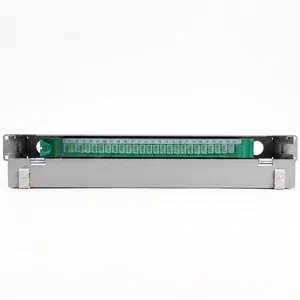
- Rack-level connectivity: high-density patch panels and fiber distribution units within each server hall
At the scale of 1GW in Sejong plus 2GW across SK's data center cluster, the total fiber management infrastructure requirement is enormous — and it needs to be built before any GPU is installed.
AI Training Clusters Require 4–8x More Fiber Ports Per Rack
Traditional enterprise data center racks typically require 12–48 fiber ports. AI training clusters running NVIDIA's latest architectures require 96–192 fiber ports per rack — a 4-to-8-fold increase. With 100,000 GPUs deployed across the GAK Sejong campus, the number of fiber interconnections multiplies accordingly. Each additional fiber port means additional adapter plates, patch panels, cable management, and splice points — all of which are ODN equipment.
ODN Equipment Is Sheet Metal, Not Silicon
Unlike AI chips that depreciate in 2–3 years and require frequent replacement, ODN equipment — fiber distribution cabinets, ODFs, splice closures — has a service life of 15–25 years with no planned obsolescence. Once installed, they remain in place through multiple generations of GPU upgrades. This means:
- The demand is front-loaded during construction — every new data center build generates a one-time but large procurement wave for fiber management infrastructure
- Retrofit and expansion projects add incremental demand as capacity grows from 55MW to 200MW to 1GW
- No technology risk: whether the data center runs Vera Rubin, Blackwell, or whatever comes next, the fiber distribution infrastructure remains the same
Korea's AI Infrastructure Ambitions
South Korea has positioned AI infrastructure as a core component of national economic strategy. The government's support for this project — demonstrated by President Lee's personal attendance at the AI Summit announcement — signals that Korea intends to build sovereign AI compute capacity rather than rely entirely on hyperscalers based in the United States or China.
The combination of SK Group's 2GW data center cluster and NAVER's 1GW GAK Sejong campus means South Korea will have over 3GW of AI data center capacity under construction or planning — a scale that requires a corresponding buildout of physical fiber infrastructure across the country. This is not just about the data centers themselves; it also includes the carrier networks, internet exchange points, and backbone routes that connect these facilities to each other and to global networks.
The ODN Supply Chain Opportunity
The construction phase of these data centers creates demand across the full ODN product spectrum:
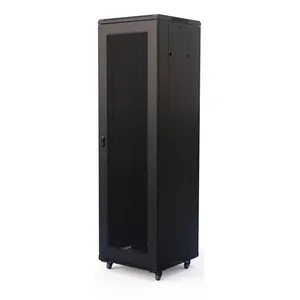
- Outdoor fiber distribution cabinets (FDC): campus entry points, external splice enclosures, and weatherproof transition boxes. SMC (Sheet Molding Compound) material is preferred for its corrosion resistance, UV stability, and lightweight properties — important for Korea's climate with hot, humid summers and cold winters
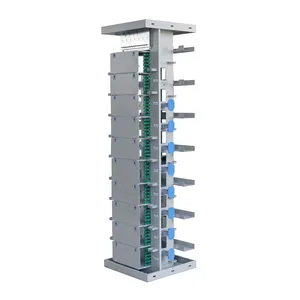
- Indoor optical distribution frames (ODF): high-capacity frames in meet-me rooms and cross-connect closets, supporting both LC and MPO connectors for mixed-density environments
- Fiber splice closures: dome and inline closures for underground and aerial cable routes connecting campus buildings
- Modular, scalable designs: because these campuses are expanding in phases (55MW → 200MW → 1GW), procurement managers prefer ODN equipment that can be deployed incrementally — sliding ODFs, expandable cabinet configurations, and pre-terminated solutions that reduce on-site installation time
The broader Asia-Pacific region is experiencing a parallel buildout. Beyond Korea, AI data center construction is accelerating in Japan, Australia, Southeast Asia, and India. Each project generates the same fundamental requirement: before GPUs arrive, fiber infrastructure must be in place. ODN equipment manufacturers who can deliver at scale — with consistent quality and reliable lead times — will benefit from this multi-year construction cycle.
Jergeo Fiber Distribution Equipment for AI Data Centers
As AI data center construction accelerates globally, reliable fiber management infrastructure is critical. Jergeo Fiber Distribution Cabinets are engineered for both outdoor campus deployments and indoor high-density environments. Available in SMC and stainless steel construction with IP65/IP67 ratings, our JFDC series supports up to 288 ports in compact form factors — designed for the phased expansion model that modern AI data centers require.
For indoor meet-me rooms and cross-connect closets, Jergeo Optical Distribution Frames provide high-capacity fiber management with sliding tray designs that support LC, SC, and MPO connectors in the same chassis — essential for mixed-architecture AI environments.
Explore Fiber Distribution SolutionsRelated Products
Sources
This article is based on official press releases from NVIDIA (nvidianews.nvidia.com) and NAVER (navercorp.com), both published July 24, 2026. All figures, quotes, and investment details are sourced directly from these press releases.